
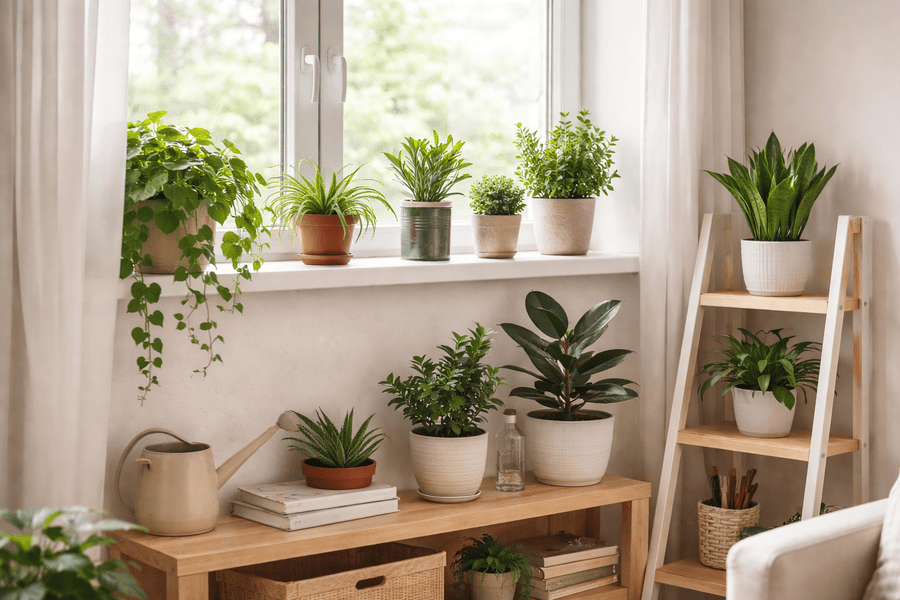
Small space gardening can get expensive fast… but it really doesn’t have to.
If you’ve ever searched for “beginner gardening supplies,” you’ve probably seen the same vibe: fancy planters, full grow light systems, special soil blends, humidifiers, meters, shelving racks, and a cart total that makes you pause and rethink the whole hobby.
Here’s the truth: most beginners don’t fail because they didn’t buy enough stuff. They struggle because they buy too much too early — and the setup becomes harder to manage than it needs to be.
This guide walks you through small space gardening on a budget in a realistic way: what you actually need, what you can reuse, what to skip, and when it’s worth upgrading later.
If you want the big-picture strategy this fits into, start here:
Small Space Gardening: Easy Wins for Beginners.
📦 What You’ll Learn
- 💸 What you actually need to start (and what you don’t)
- ♻️ Simple ways to reuse everyday items for gardening
- 🪴 Budget-friendly container + soil choices that still work
- 🚫 Common purchases that waste money in small spaces
- 📈 When it makes sense to spend more later
💡 Why Small Space Gardening Should Cost Less
Small spaces don’t need scale — they need smart choices.
When you’re gardening in an apartment, on a balcony, or in a tight indoor corner, you’re working with fewer plants and fewer containers by default. That should reduce your costs… unless you accidentally build a “gear-first” setup that’s more complicated than your space can support.
Budget-friendly small space gardening works because it focuses on:
- ✅ Fewer plants, better results: You can learn faster and waste less.
- ✅ Less water + fewer supplies: A small setup is easy to maintain consistently.
- ✅ Quick feedback: You notice issues fast (light, watering, pests) and fix them early.
Think of your first garden like a “starter kitchen.” You don’t need every gadget. You need a few solid basics you’ll actually use.
🧰 The Only Things You Actually Need to Start
Before you buy anything new, lock in the true essentials. If you have these, you can successfully grow plants in a small space.
🪴 1) Containers with drainage
This is non-negotiable. Drainage holes are the difference between “beginner-friendly” and “mystery plant death.”
- ✅ Pots with holes in the bottom
- ✅ A saucer or tray to catch runoff
- 🚫 Avoid containers with no drainage unless you’re using them as a decorative cover pot
🌱 2) A basic potting mix
You don’t need a specialty blend to start. You just need a decent potting mix that drains well and doesn’t turn into mud.
- ✅ Choose a standard indoor potting mix (light and fluffy)
- 🚫 Skip heavy “garden soil” indoors — it compacts and holds too much water
☀️ 3) Usable light
You don’t need perfect light. You need honest light.
A bright window, a balcony corner, or even a consistent shelf near natural light can be enough for beginner wins. If you’re unsure, this post helps you work with what you’ve got:
Maximize Light in Small Gardening Spaces: Simple Tricks.
💧 4) A consistent watering routine
The most expensive thing you can do as a beginner is “random watering.” It leads to replacing plants and constantly tweaking supplies.
- ✅ Check soil regularly (finger test works fine)
- ✅ Water thoroughly, then let the pot drain
- ✅ Repeat only when the plant actually needs it
If watering is where your budget setup struggles, use this guide:
Watering Tips for Small and Compact Gardens.
♻️ Reuse What You Already Have (Before You Buy Anything)
One of the best budget moves is not buying new stuff at all — it’s using what you already own in a smarter way.
A lot of beginner spending happens because plants don’t have a “home base.” So people buy racks, stands, trays, tools, and containers without a plan.
Instead, do a quick scan of your space and pull from what’s already there.
🪣 Budget containers you can reuse safely
If you can add drainage holes and the material is safe to hold moist soil, it can work.
- ♻️ Old nursery pots (these are honestly perfect)
- ♻️ Food-grade buckets or bins (add drainage holes)
- ♻️ Storage containers used as drip trays (not as the planting pot)
- ♻️ Old baking sheets as watering trays for batches of small pots
Simple safety rule: if you don’t know what the container held before (chemicals, cleaners, etc.), don’t use it for edible plants.
🪑 Reuse your layout before buying plant furniture
Plant stands and shelves can be helpful… but you might already have what you need.
- 📚 A bookshelf near a window = instant plant shelf
- 🪟 Windowsills = free prime real estate
- 🪑 A small side table = a clean “plant station”
- 🧺 A tray on a table = easy to move + easy to water
Budget gardening is mostly about reducing friction. If your plants are easy to access, you’ll care for them better — and that saves money fast.
Next, we’ll cover the budget choices that matter most: containers, soil, and the purchases that look helpful but usually waste money in small spaces.
🪴 Budget-Friendly Container Choices That Still Work
In small spaces, containers need to do three things well:
- ✅ Hold enough soil to support the plant
- ✅ Drain properly
- ✅ Fit your space without creating clutter
You don’t need expensive pots to get that done.
🧱 Plastic pots: cheap, light, and beginner-proof
Plastic gets a bad reputation because it’s not “aesthetic,” but it’s honestly one of the best materials for small-space beginners.
- 🪶 Lightweight (easy to move toward light)
- 💧 Holds moisture more evenly than terracotta
- 💸 Usually the lowest cost option
If you want it to look nicer, you can always slip it into a decorative cover pot later.
🧺 Fabric grow bags: affordable and forgiving
Grow bags are a great budget option for balconies and patios, especially for vegetables or larger plants.
- 🌬️ Better airflow around roots
- ✅ Drainage is basically built in
- 🧼 Easy to store when not in use
Small-space tip: use a tray underneath, because grow bags can drip more than hard pots.
🏺 Terracotta: pretty, but not always budget-friendly long-term
Terracotta is classic, but it dries out faster — which can mean more watering, more plant stress, and more replacement plants if you’re not on top of it.
- ✅ Good if you tend to overwater
- 🚫 Harder if you forget to water
It’s not “bad,” it’s just not the easiest budget choice for everyone.
🚫 A common money trap: decorative pots with no drainage
These look great in stores and online… and they cause so many beginner problems.
- ❌ Water pools at the bottom
- ❌ Roots stay wet too long
- ❌ You can’t properly flush salts and buildup
If you love the look, use them as a cover pot: keep the plant in a nursery pot inside, then lift it out to water.
🌱 Soil & Fertilizer: Keep It Simple (and Save Money)
Soil is one of the easiest places to overspend because the options feel endless.
For beginner small-space gardening, you can keep it simple:
🌿 Choose one solid potting mix
- ✅ Look for a standard potting mix designed for containers/indoor use
- ✅ It should feel light, not dense
- 🚫 Avoid “topsoil” or “garden soil” indoors
If you only buy one thing, make it a decent potting mix. Bad soil causes more plant losses than almost anything else.
🧪 Fertilizer: optional at first, simple later
New plants usually come with enough nutrients for a little while, especially if you’re using fresh potting mix.
- ✅ If you want to keep it simple, use one balanced fertilizer
- ✅ Start light (half strength) and see how plants respond
- 🚫 Skip buying three different fertilizers early — it’s rarely necessary
♻️ Reusing soil (when it’s okay)
If you’re gardening on a budget, you’ll eventually wonder about reusing potting mix. Sometimes it’s fine — sometimes it’s not.
- ✅ OK to reuse if the plant was healthy and pest-free
- ✅ Refresh it with a little new mix and a small amount of fertilizer
- 🚫 Don’t reuse soil from a plant that had pests, mold, or rot issues
💸 Common Beginner Purchases That Waste Money in Small Spaces
This is the section that saves the most money. Because once you skip the “trap purchases,” the rest gets easy.
❌ 1) Buying a full grow light setup before testing your natural light
Grow lights can be amazing, but most beginners buy them before they even know what their windows can do.
- ✅ Start by placing plants in your brightest realistic spot
- ✅ If plants stretch and struggle, then consider supplemental light
❌ 2) Too many tools
For a small space garden, you can do almost everything with:
- 🧤 One pair of gloves (optional)
- 🥄 A small scoop or trowel
- ✂️ A basic pair of scissors for trimming
That’s it. Most tool kits are overkill for beginners.
❌ 3) Buying plants faster than you learn care
This is the biggest hidden budget killer: replacing plants that didn’t thrive because the setup wasn’t stable yet.
- ✅ Start with a few plants, learn what they need
- ✅ Expand once you can keep the first ones healthy
If you’re building your setup slowly, this pairs nicely with:
How Many Plants Can You Grow in a Small Space?.
❌ 4) “Organizer” shelves that don’t match your real light
A plant rack placed in a dark corner is still a dark corner. Pretty storage doesn’t replace sunlight.
- ✅ Always build your plant setup around light first
- ✅ Then arrange shelves, trays, or tables around that spot
❌ 5) Buying decorative items that make care harder
If a cute setup makes watering messy, you’ll eventually avoid it. That’s when plants decline and replacements start happening.
A clean, functional setup beats a perfect aesthetic when you’re starting out.
Next, we’ll talk about smart upgrades — the stuff that’s worth spending on only when it solves a real problem.
📈 When It Makes Sense to Spend More (Smart Upgrades Only)
Budget gardening isn’t about never spending money. It’s about spending money when it actually improves your results.
Here are upgrades that are worth it when the time is right:
💡 1) Add lighting only when light is truly limiting growth
If your plants are stretching, leaning hard toward windows, or producing weak growth, your light may be too low for what you’re trying to grow.
- ✅ Upgrade if you want consistent growth year-round
- ✅ Upgrade if your best window still isn’t enough
- 🚫 Don’t upgrade just because social media says you “need” it
If you’re unsure, work through this first:
Maximize Light in Small Gardening Spaces: Simple Tricks.
🪴 2) Upgrade containers when plants outgrow them
A plant that’s rootbound dries out fast and becomes high-maintenance. Repotting can actually save money by preventing decline.
- ✅ Upgrade if you’re watering constantly and the plant still droops
- ✅ Upgrade if roots are circling the pot or coming out the bottom
- ✅ Upgrade if the plant is top-heavy and unstable
🧺 3) Add shelving only when floors feel crowded
Shelves aren’t mandatory, but they can be a great “space multiplier” once you know where your best light is.
- ✅ Upgrade if your plants are blocking walkways
- ✅ Upgrade if you want to raise plants closer to window height
- 🚫 Don’t add shelving in low-light zones just to store plants
💧 4) Add watering helpers if watering is the stress point
If your routine is solid and you still struggle to keep moisture consistent, self-watering trays or better saucers can be worth it.
This guide can help you dial in the routine first:
Watering Tips for Small and Compact Gardens.
🔗 How This Fits Into Your Small Space System
Small space gardening on a budget works best when it’s connected to smart limits and planning.
- 🌿 Start here: Small Space Gardening: Easy Wins for Beginners
- 💧 Watering support: Watering Tips for Small and Compact Gardens
- 🪴 Plant limit guide: How Many Plants Can You Grow in a Small Space?
❓ Small Space Gardening on a Budget FAQs
Do I need expensive pots for small space gardening?
No. As long as a container has drainage and holds enough soil for the plant, inexpensive plastic pots or reused nursery pots work extremely well for beginners.
What’s the cheapest way to start a small space garden?
Start with one or two plants, reuse containers you already have (with drainage holes added), buy one decent potting mix, and place everything in your best natural light spot.
Is it okay to reuse containers like buckets or bins?
Yes, as long as they’re clean, food-safe, and you add drainage holes. Avoid unknown containers that may have held chemicals, especially for edible plants.
Do I need fertilizer right away?
Not always. Fresh potting mix usually provides nutrients early on. If growth slows after a few weeks, a simple balanced fertilizer used lightly is usually enough.
When should I buy a grow light?
Buy a grow light only if your plants are stretching, leaning heavily toward windows, or growing weakly even in your brightest realistic location. Test natural light first before upgrading.
What’s the biggest money mistake beginners make?
Buying too many plants and too much gear before learning the basics. A small number of healthy, easy-to-care-for plants will save money and build confidence faster.
🌼 Conclusion
Small space gardening on a budget is completely doable — and honestly, it’s often the best way to learn.
Start with a simple setup, reuse what you already have, and avoid the temptation to buy your way into confidence. Once your routine is stable, you can upgrade slowly based on real needs (not hype).
If you want the full beginner strategy that connects everything together, head back to:
Small Space Gardening: Easy Wins for Beginners.

👋 About the Author
Steve is the creator of Indoor Gardening Essentials and a hands‑on indoor gardener with years of experience growing plants in small apartments, tight corners, and low‑light spaces.
He specializes in practical, beginner‑friendly setups—from kitchen herbs and windowsill succulents to self‑watering planters, terrariums, and simple hydroponic systems. Everything he teaches comes from real experimentation, not guesswork.
Steve documents his projects, successes, and occasional failures on his YouTube channel Small Farms Big Ideas , where he tests grow lights, soil mixes, watering routines, and small‑space gardening methods.
His goal is simple: help new indoor gardeners build confidence, avoid common mistakes, and grow healthy plants—no matter how small their space is.