
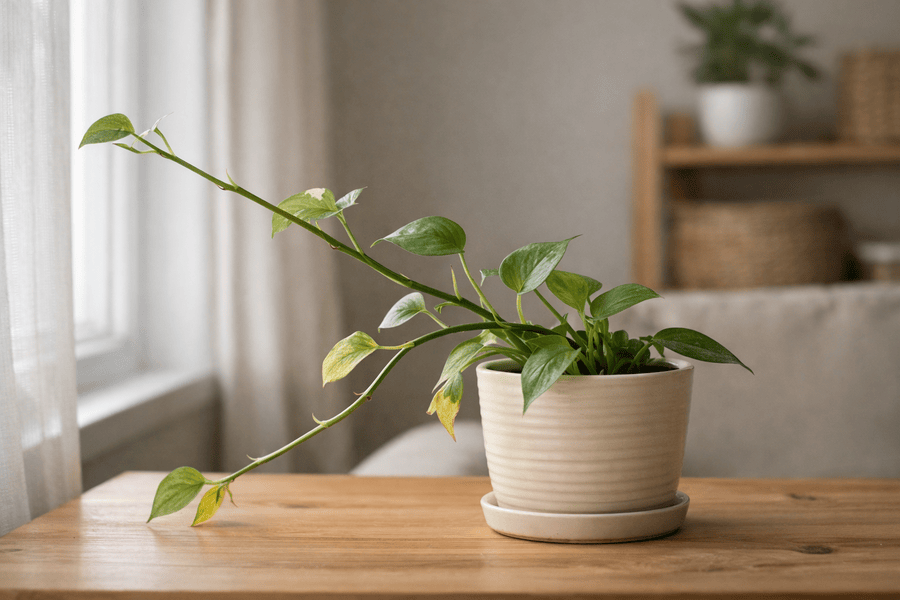
Ever look at a plant and think, “You’re alive… but you’re also kind of melting in slow motion”? 😅 If your indoor plant is stretching, leaning, fading, or just refusing to grow, there’s a solid chance it’s not being dramatic — it’s asking for more light.
Light is the #1 limiter for indoor plants (even in rooms that feel bright to you). The tricky part is that low light doesn’t always look like an emergency at first. It often shows up as subtle, slow changes: smaller leaves, leggy stems, or a plant that keeps leaning toward the window like it’s trying to escape.
In this guide, you’ll learn the clearest signs your indoor plants need more light, how to tell light issues apart from watering problems, and what to adjust first — without guessing or buying a bunch of gear. 🌿
✨ What You’ll Learn
- ✅ The most common visual signs your indoor plants need more light
- 🧠 How to tell “low light” symptoms from watering or nutrient issues
- 🪟 Why window direction + distance changes everything
- ⏳ How long it takes to see improvement after you increase light
- 🌞 Easy, beginner-friendly ways to increase light safely
☀️ Why Indoor Plants Need More Light Than You Think
Your eyes are extremely good at adjusting to indoor brightness. Plants are not. A room can feel “bright” and still be dim from a plant’s perspective — especially if the plant sits far from the window, under a shelf, behind a curtain, or in a corner.
Light is plant fuel. When light is limited, plants often respond by:
- 🐢 slowing growth
- 📏 stretching to reach brighter spots
- 🍃 making smaller leaves to conserve energy
- 🍂 dropping older leaves to “reduce overhead”
If you want the big-picture lighting roadmap, this hub ties everything together: Indoor Garden Lighting Made Easy.
🌱 The Most Common Signs Your Indoor Plants Need More Light
Below are the most reliable “tell me you’re low on light without telling me” signals. 😄 You don’t need to memorize all of these — usually one or two show up first.
📏 1) Leggy or Stretched Growth
This is the classic low-light sign. Your plant grows longer stems with bigger gaps between leaves, trying to reach a brighter area. The result looks tall, floppy, and sparse.
- 🌿 Long stems
- 📍 Wide spacing between leaves
- 🧍 A “thin and stringy” shape
Tip: If your plant is stretching, avoid the temptation to “fix” it with fertilizer. More food doesn’t replace light.
🪟 2) Leaning Hard Toward the Window
A slight lean is normal (plants naturally grow toward light). But a strong lean — where the whole plant tilts or twists toward a window — usually means it wants more light or it needs rotating.
- 🔄 Rotate the pot 1/4 turn weekly
- 📏 If leaning continues, move it closer to the window
🍃 3) New Leaves Are Smaller Than Older Leaves
When light is limited, plants often downsize new leaves because they don’t have enough energy to build full-size growth. If your newest leaves keep getting smaller over time, that’s a big clue.
Bonus clue: Slow unfurling (new leaves that take forever to open) can also point to low light.
🎨 4) Fading Color or Losing Variegation
Low light can cause leaves to look paler, dull, or “washed out.” Variegated plants (white/yellow patterns) may produce more solid-green leaves in low light because green is where photosynthesis happens.
- 💚 More plain green leaves on a variegated plant
- 🟡 Patterns becoming less sharp over time
- 🌫️ Overall dullness
🌸 5) No Flowers or No Fruit (Even Though the Plant Looks “Okay”)
Flowering and fruiting require more energy than simply staying alive. So a plant can look fine, but still refuse to bloom if light isn’t strong enough.
If you’re growing herbs or edibles indoors, lighting becomes even more important. These pages help you dial it in:
🍂 6) Leaf Drop From the Bottom Up
In low light, plants sometimes drop older, lower leaves because those leaves aren’t “paying rent” anymore (they’re not producing enough energy). It’s a slow survival strategy.
Note: Sudden leaf drop can also be watering stress. That’s why it helps to do a quick diagnosis before changing everything.
🐢 7) Slow Growth That Feels Like “Nothing Is Happening”
This is the most frustrating one because it feels like your plant is stuck. Often it’s simply running in low gear due to limited light — especially in fall and winter.
Indoor Plant Troubleshooting Guides
🧠 Signs That Look Like Low Light (But Might Be Something Else)
Light issues are common — but not every sad-looking leaf is a lighting problem. Here are a few look-alikes that trip up beginners.
💧 Overwatering can mimic low-light droop
In low light, plants use water more slowly. That means soil stays wet longer. If you keep watering on the same schedule, a light problem can turn into a root problem.
Helpful checks:
- Stick your finger 1–2 inches down — is it still wet?
- Does the pot have a drainage hole?
- Is the plant droopy while the soil is damp?
If you want a simple watering baseline: When to Water Indoor Plants.
🐛 Pests can slow growth and cause leaf issues
If you see speckling, sticky residue, webbing, or distorted new leaves, check for pests. Low light can weaken a plant, but pests can also be the root cause.
🧪 Nutrients are rarely the first reason indoor plants stall
If light is low, fertilizer won’t create faster growth — it can actually stress the plant. If you’re unsure about feeding frequency, this keeps it beginner-simple: How Often Should I Fertilize My Indoor Plants?.
Watering & Plant Stress Guides
🪟 Quick Light Checks You Can Do at Home (No Tools Needed)
You don’t need a meter to get your light “close enough” for happy plants. Try these simple checks.
✋ The Shadow Test
At midday, hold your hand about 12 inches above the plant and look at the shadow on the surface below.
- 🌞 Sharp, crisp shadow: bright light
- 🌤️ Soft/fuzzy shadow: medium light
- 🌥️ Barely visible shadow: low light
📏 The Distance Check
Light drops quickly as you move away from the glass. If your plant is more than a few feet from the window and it’s not a true low-light plant, slow growth is expected.
🧭 The Direction Check
Window direction changes intensity and timing. This guide helps you quickly match plants to window reality: What Kind of Light Do My Houseplants Need?.
Indoor Plant Lighting Guides
🌞 How to Increase Light Safely (Without Shocking Your Plant)
If your plant needs more light, the best fixes are usually simple and gradual. Small moves beat big moves.
🪟 1) Move it closer to the window
This is often the fastest improvement. Even moving a plant from “across the room” to “near the window” can change growth quality within a few weeks.
🔄 2) Rotate weekly
A 1/4 turn each week helps prevent leaning and encourages even growth.
🧼 3) Clean the leaves and the window
Dust reduces light absorption. Clean leaves gently and you’re basically giving the plant “more light” without changing the light source.
🪞 4) Use simple reflection
White walls, light-colored surfaces, and reflective backgrounds can bounce extra light into foliage — especially on shelves.
💡 5) Add supplemental light if your space truly needs it
If your home has limited natural light (or winter is brutal), supplemental light can help. If you want a simple decision guide first: Do You Really Need Grow Lights to Garden Indoors?.
Beginner Indoor Gardening Guides
⏳ How Long Does It Take to See Improvement?
This is where patience pays off. Plants don’t flip a switch overnight. Once you improve lighting, most changes show up in new growth — not in old leaves.
A realistic timeline:
- ✅ 7–14 days: growth direction improves, less leaning, better posture
- ✅ 2–4 weeks: healthier new leaves, better color, stronger stems
- ✅ 4–8 weeks: more obvious growth speed changes (especially in brighter seasons)
Important: If a leaf was damaged from low light or stress, it usually won’t “repair.” The win is that new growth looks better.
🚫 Common Mistakes When Fixing Low Light
- 🔥 Throwing a plant into full sun suddenly: this can cause scorch
- 🔁 Moving it daily: plants need time to adjust
- 🧪 Over-fertilizing to “force growth”: light comes first
- 💧 Keeping the same watering schedule after increasing light: brighter light often dries soil faster
💬 FAQs
What are the first signs a plant isn’t getting enough light?
The earliest signs are often slow growth, leaning toward the window, and stretched stems with bigger gaps between leaves. New leaves may also come in smaller than older ones.
How can I tell if my plant needs more light or just water?
Check the soil first. If the plant droops but the soil is still wet, it’s often a light or root-oxygen issue rather than a need for more water. If the soil is dry and the plant droops, watering may be the problem.
How far from a window is too far for most plants?
It depends on window direction and season, but light intensity drops quickly with distance. Many plants do best within 1–3 feet of a bright window. Farther away often becomes low light.
Can low-light plants still need more light?
Yes. “Low-light tolerant” plants can survive in lower light, but they still grow better in brighter spots. Low light usually means slower growth.
How long does it take for a plant to recover from low light?
You may see posture improve within 1–2 weeks, and healthier new leaves within 2–4 weeks. Full improvement depends on the plant and season.
Will grow lights fix low-light problems?
They can, especially in winter or in homes with limited natural light. Consistency, placement, and the number of hours matter more than having a complicated setup.
Why is my plant growing toward the window?
Plants naturally grow toward the strongest light source. If the leaning is extreme, it’s a sign the plant wants more light or needs regular rotating.
🌻 Conclusion
If your indoor plant is stretching, leaning, fading, dropping lower leaves, or just refusing to grow, it’s very often asking for one thing: more light. The fix usually isn’t complicated — move it closer to a window, rotate weekly, clean leaves, and make small adjustments instead of dramatic changes.
And remember: most improvements show up in new growth. Give your plant a couple weeks to respond and watch what happens.
Continue Exploring Indoor Plant Lighting
📚 References & Further Reading
For deeper, research-based guidance on indoor plant lighting, light intensity, and plant placement, these university Extension resources are excellent next reads:
- University of Minnesota Extension – Lighting for Indoor Plants
- University of Maryland Extension – Lighting for Indoor Plants
- University of Illinois Extension – Indoor Plant Lighting
- Iowa State University Extension – Growing Indoor Plants Under Supplemental Lights
- Penn State Extension – Caring for Houseplants

👋 About the Author
Steve is the creator of Indoor Gardening Essentials and a hands‑on indoor gardener with years of experience growing plants in small apartments, tight corners, and low‑light spaces.
He specializes in practical, beginner‑friendly setups—from kitchen herbs and windowsill succulents to self‑watering planters, terrariums, and simple hydroponic systems. Everything he teaches comes from real experimentation, not guesswork.
Steve documents his projects, successes, and occasional failures on his YouTube channel Small Farms Big Ideas , where he tests grow lights, soil mixes, watering routines, and small‑space gardening methods.
His goal is simple: help new indoor gardeners build confidence, avoid common mistakes, and grow healthy plants—no matter how small their space is.