
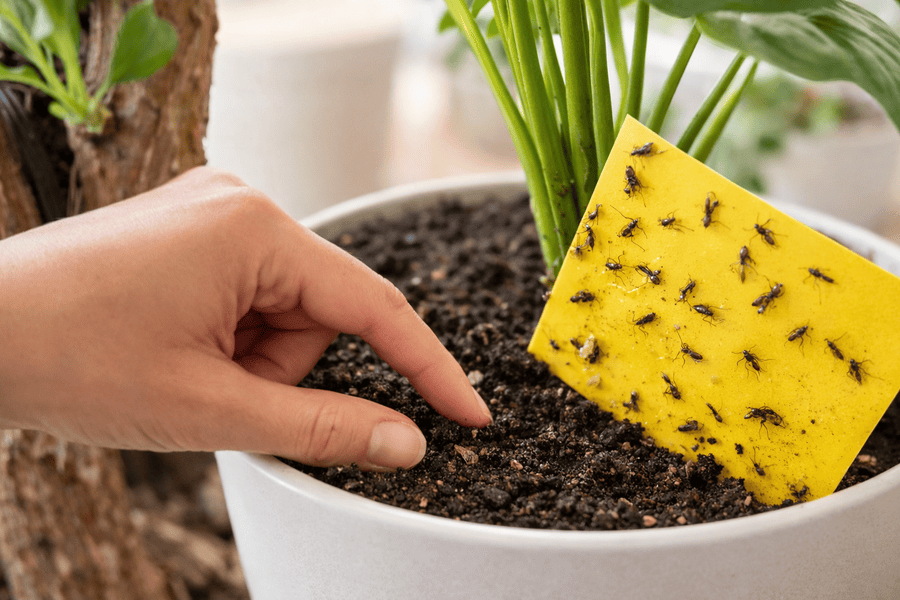
If you’ve noticed tiny little flies hovering around your pots (especially when you water), you’re dealing with one of the most common indoor growing annoyances: fungus gnats.
The good news? You don’t need to panic, and you definitely don’t need to nuke your home with sprays.
If you’re trying to prevent fungus gnats, the solution almost always comes down to one thing: your container soil staying moist a little too long.
Fungus gnats aren’t really attracted to your plant — they’re attracted to the damp, cozy soil conditions that let them keep multiplying.
In this guide, you’ll learn how to prevent fungus gnats in container soil using simple, beginner-friendly steps that work long-term — drying the soil the right way, improving drainage and airflow, and making the soil surface less welcoming for eggs and larvae.
And if your pots tend to stay soggy for days, start here first (it fixes the “why” behind most gnat problems):
Fix Poor Drainage Without Repotting (Quick Rescue).
📦 What You’ll Learn
- ✅ Why fungus gnats show up in indoor container soil
- ✅ The moisture and drainage issues that keep them coming back
- ✅ The simplest prevention steps that break the life cycle
- ✅ Soil surface tricks that make pots less gnat-friendly
- ✅ What helps short-term vs what fixes the problem long-term
🪰 What Fungus Gnats Are (and Why They Keep Returning)
Fungus gnats are tiny, dark, mosquito-looking flies that hang out around indoor pots. The adults are mostly just annoying — they buzz around the soil surface, windows, and lights.
The real issue is what you don’t see: fungus gnat larvae live in the top layer of damp potting mix. When conditions are right, the cycle repeats fast: adults lay eggs in moist soil, larvae hatch and feed, and a new wave of adults shows up right when you thought you “got rid of them.”
✅ Why indoor containers are the perfect home for them
- 💧 Potting soil can stay damp longer indoors (less sun, less airflow)
- 🪴 Organic potting mixes give larvae plenty to feed on
- 🪣 Saucers and cache pots can trap moisture underneath
- 🏠 Warm indoor temps help the life cycle move quickly
That’s why prevention works better than chasing adult gnats around with a swatter. If you change the soil conditions, the problem runs out of fuel.
💧 The Real Cause: Container Soil Staying Moist Too Long
Most fungus gnat problems aren’t caused by a “dirty” home or bad luck — they’re caused by soil that stays wet at the surface. Even if you’re watering carefully, a few container setup issues can keep the top layer damp enough for gnats to thrive.
Common reasons soil doesn’t dry out normally
- 🧱 Compacted soil that holds water and slows airflow
- 🪴 A pot that’s too large for the root system (the middle stays wet forever)
- 🕳️ Drainage holes blocked by soil, roots, or mineral buildup
- 🪣 Standing water in saucers, trays, or decorative cover pots
- 🌥️ Low light + cool rooms (slower evaporation)
If your pot feels heavy for days after watering or the soil stays wet longer than a week, prevention gets a lot easier once drainage improves. This step-by-step rescue guide helps you fix the soggy setup first:
Fix Poor Drainage Without Repotting (Quick Rescue).
🌬️ Prevention Step #1: Dry the Top Layer to Break the Life Cycle
Fungus gnats lay eggs in moist topsoil — so one of the simplest prevention moves is letting the top inch dry out between waterings. You’re not trying to turn your pot into a desert. You’re just making the surface less welcoming.
✅ What “dry the top inch” actually means
- 👆 The top 1 inch feels dry to the touch, not cool and damp
- 🪵 The surface doesn’t look dark and wet for days
- 💧 You water only when the plant actually needs it (not on a schedule)
✅ Simple ways to help the surface dry faster
- 🌬️ Increase airflow nearby (a small fan across the room helps)
- ☀️ Move the plant slightly closer to its normal light source
- 🪴 Space pots apart so air can move between them
- 🚫 Avoid misting the soil surface (it keeps the gnat zone wet)
Next, we’ll go deeper into container fixes (drainage holes, airflow under the pot, saucers) and the best soil surface strategies that make gnats much less likely to return.
🕳️ Prevention Step #2: Improve Drainage and Airflow in Containers
If fungus gnats keep coming back, the problem usually isn’t how often you water — it’s how long water stays trapped in the pot. Improving drainage and airflow makes the soil dry at a pace gnats don’t like.
✅ Check and clear drainage holes
Even pots with drainage holes can drain poorly if those holes are blocked.
- 🔎 Flip the pot and check that all holes are open
- 🔎 Clear compacted soil or mineral buildup gently
- 🔎 If roots are growing out, drainage may already be slowed
Blocked drainage keeps the lower soil wet — which keeps the surface damp longer too.
✅ Elevate the pot slightly
Pots that sit flat on shelves, floors, or trays dry much slower from the bottom.
- 🪴 Use pot feet, a trivet, or an upside-down saucer as a spacer
- 🌬️ Make sure air can circulate underneath
- 🪣 Empty saucers 10–15 minutes after watering
If you rely on saucers to protect floors, this guide pairs well here:
Saucers & Drip Trays: How to Protect Floors Without Root Rot.
🪵 Prevention Step #3: Loosen Compacted Soil (Safely)
Compacted soil holds moisture near the surface — exactly where fungus gnats lay eggs. You don’t need to repot to improve this.
🚩 Signs soil compaction is part of the problem
- 🧱 Water pools on top before soaking in
- 🧱 The surface feels hard or crusted when dry
- 🧱 Soil shrinks away from the pot edges
✅ How to loosen soil without harming roots
- 🥢 Use a chopstick, skewer, or pencil
- 🥢 Gently poke straight down into the top inch only
- 🥢 Stop if you feel resistance — don’t force it
This creates air channels that help moisture move downward instead of sitting on the surface.
🪨 Prevention Step #4: Use Soil Surface Barriers That Deter Gnats
Because fungus gnats lay eggs in moist topsoil, changing the surface texture can dramatically reduce how attractive your pots are to them.
✅ Effective top-dressing options
- 🪨 Coarse sand
- 🪨 Horticultural grit
- 🪨 Fine gravel (not decorative pebbles)
Apply a thin, even layer over the soil surface. These materials dry quickly and make it harder for gnats to reach moist soil.
⚠️ What to avoid on the soil surface
- ❌ Decorative moss (holds moisture)
- ❌ Thick pebble layers that trap water below
- ❌ Organic mulches indoors
🧪 Prevention Step #5: Low-Toxicity Controls (Support, Not a Shortcut)
Sometimes you’ll still see adult gnats even after fixing soil conditions. A few low-impact tools can help — as long as they support prevention rather than replace it.
✅ Sticky traps
- 🟨 Catch adult gnats and help you monitor progress
- 🟨 Reduce egg-laying over time
- 🟨 Won’t fix the problem alone
✅ BTi (mosquito bits or dunks)
- 🧫 Targets larvae in the soil
- 🧫 Useful during heavy infestations
- 🧫 Works best alongside improved drainage
Sprays, neem oil, and constant treatments usually create more frustration than results when soil conditions don’t change.
Next, we’ll cover timelines (how long it takes to see results), common mistakes that cause repeat infestations, and when repotting is the cleanest solution if prevention still isn’t enough.
⏳ How Long It Takes to See Results (What’s Normal)
Once you change the soil conditions, fungus gnats don’t disappear overnight — but you should see steady improvement if prevention is working.
What progress usually looks like
- 📅 3–5 days: Fewer adult gnats flying around
- 📅 7–10 days: Noticeably less activity near the soil surface
- 📅 2–3 weeks: The life cycle breaks and new gnats stop appearing
Sticky traps may still catch a few stragglers early on — that’s normal. What matters is whether numbers keep dropping instead of bouncing back.
If you’re still seeing heavy activity after two weeks, it usually means one of the core conditions (moisture, drainage, or soil surface) hasn’t fully changed yet.
🚫 Common Mistakes That Cause Fungus Gnats to Return
Most repeat infestations happen because one small habit sneaks back in. These are the biggest culprits.
- ❌ Watering on a schedule instead of checking the soil
- ❌ Letting pots sit in water-filled saucers
- ❌ Misting the soil surface “for humidity”
- ❌ Using decorative moss or moisture-trapping top layers
- ❌ Treating adults but ignoring soil conditions
If fungus gnats keep coming back, it’s almost never because prevention doesn’t work — it’s because moisture crept back in quietly.
🪴 When Prevention Isn’t Enough (Repot or Not?)
In many cases, you can prevent fungus gnats without repotting. But there are times when starting fresh is the cleanest solution.
Prevention is usually enough if:
- ✅ Gnat numbers are clearly decreasing week by week
- ✅ The top inch of soil dries normally between waterings
- ✅ The pot no longer smells musty or sour
Repotting is the better option if:
- 🚩 Soil stays wet more than a week despite fixes
- 🚩 The potting mix smells stale or rotten
- 🚩 Gnats return immediately after drying attempts
- 🚩 The soil structure is broken down and muddy
If you do repot, use fresh, well-draining soil and make sure the new container setup allows water to exit freely. Prevention works best when the starting conditions are right.
🌱 How to Keep Fungus Gnats From Coming Back
Once the problem is under control, a few simple habits make fungus gnats unlikely to return.
- 🌱 Let the top layer dry between waterings
- 🌱 Empty saucers shortly after watering
- 🌱 Keep soil loose and breathable
- 🌱 Replace old potting mix periodically
- 🌱 Adjust watering as light and seasons change
If soggy soil has been a recurring issue, this guide pairs naturally with everything you’ve learned here:
Fix Poor Drainage Without Repotting (Quick Rescue).
🌿 Conclusion: Change the Conditions, Not Just the Symptoms
Fungus gnats are frustrating — but they’re also predictable. They show up when soil stays moist, airflow is limited, and the surface stays inviting.
By focusing on container setup, drainage, and soil behavior, you stop the problem at its source. No constant treatments, no guessing, no panic.
Once you understand what fungus gnats need to survive, preventing them becomes part of normal plant care — not a recurring battle.
Containers and Systems Ideas for Small Gardens: Sure Fire Tips
❓ Frequently Asked Questions
What causes fungus gnats in container soil?
Fungus gnats are usually caused by potting soil staying moist too long. Damp topsoil gives adults a place to lay eggs, and larvae thrive in consistently wet, organic potting mixes. Poor drainage, compacted soil, oversized pots, and standing water in saucers often make the problem worse.
Do fungus gnats harm indoor plants?
Adult fungus gnats are mostly annoying, but larvae can irritate or damage roots when numbers are high, especially in seedlings or small, stressed plants. The bigger issue is that fungus gnats usually signal soil staying too wet, which can lead to root problems over time.
Will letting the soil dry out get rid of fungus gnats?
Letting the top inch of soil dry between waterings helps break the fungus gnat life cycle because eggs and larvae depend on moist topsoil. Drying alone works best when paired with better drainage and airflow so the pot doesn’t stay wet underneath.
How do I prevent fungus gnats from coming back?
To prevent fungus gnats from returning, keep the soil surface from staying constantly damp. Water only when the plant needs it, empty saucers after watering, improve airflow around the pot, and avoid moisture-trapping top layers like decorative moss. Using a gritty surface dressing can also make pots less inviting.
Do sticky traps solve fungus gnat problems?
Sticky traps help catch adult fungus gnats and reduce egg-laying, but they don’t solve the problem alone. They work best as support while you fix the root cause, which is usually soil staying moist too long.
When should I repot to stop fungus gnats?
Repotting is worth considering if fungus gnats keep returning despite improved watering, drainage, and soil-surface changes, or if the potting mix stays wet for more than a week. Repotting can also help if the soil smells stale or has broken down into a dense, muddy texture that won’t dry normally.

👋 About the Author
Steve is the creator of Indoor Gardening Essentials and a hands‑on indoor gardener with years of experience growing plants in small apartments, tight corners, and low‑light spaces.
He specializes in practical, beginner‑friendly setups—from kitchen herbs and windowsill succulents to self‑watering planters, terrariums, and simple hydroponic systems. Everything he teaches comes from real experimentation, not guesswork.
Steve documents his projects, successes, and occasional failures on his YouTube channel Small Farms Big Ideas , where he tests grow lights, soil mixes, watering routines, and small‑space gardening methods.
His goal is simple: help new indoor gardeners build confidence, avoid common mistakes, and grow healthy plants—no matter how small their space is.