
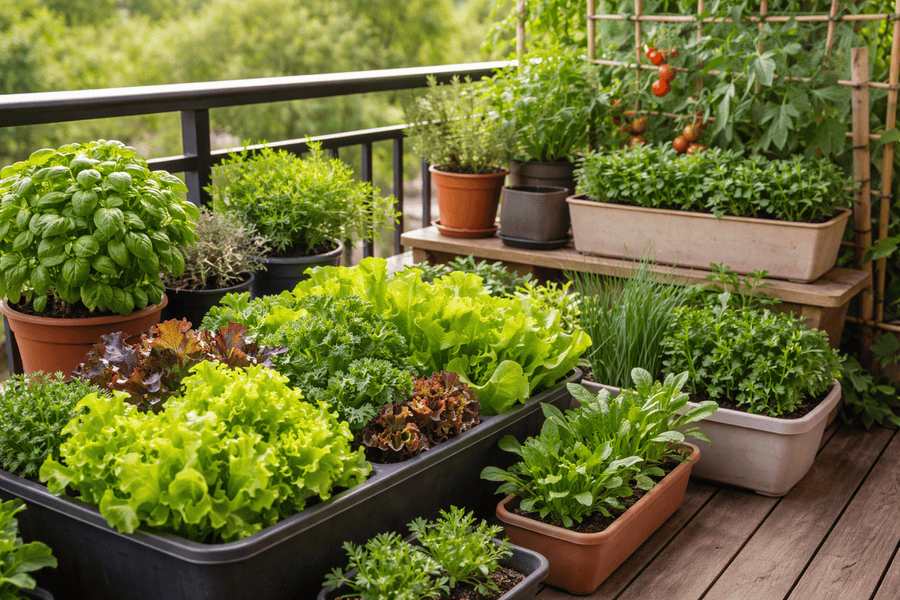
If you’re gardening in a small space, you already know the truth: every inch matters. A tiny patio, balcony, or a compact corner of your yard can produce a surprising amount of food… but only if you plan for yield on purpose.
This guide shows you how to maximize yield in tiny and compact gardens without turning your space into a crowded jungle that barely produces. You’ll learn what to grow, how to arrange it for steady harvests, and the small habits that make a big difference.
If you want the full beginner foundation behind this category, start here: Small Space Gardening: Easy Wins for Beginners.
📦 What You’ll Learn
- ✅ How to pick crops that give more food per square foot
- ✅ How to plan spacing so plants grow fast (not stressed)
- ✅ The “rotation” method that keeps your space producing longer
- ✅ How vertical supports increase yield without adding clutter
- ✅ A simple small-space yield plan you can copy today
🌿 What “Max Yield” Really Means in a Small Garden
In a big backyard, you can throw seeds around and still get something. In a compact garden? Not so much. Max yield in a small space doesn’t mean squeezing in more plants. It means making your space productive for longer and avoiding the common traps that quietly cut harvests.
- 🌱 You choose plants that keep producing (not one-and-done harvests).
- 🔁 You replant in small rounds so the space stays “in production.”
- 📈 You grow up (vertical) instead of only out (sprawling).
- ✂️ You manage plants so energy goes into food, not chaos.
- 💧 You avoid stress swings that cause bitterness, stunting, or flower drop.
If you’re unsure whether your current setup is simply “too full,” this pairs perfectly with How Many Plants Can You Grow in a Small Space?.
📏 Step 1: Measure Your Real Growing Space (Not the Whole Patio)
A classic small-space mistake is planning based on the total size of your patio or yard corner instead of the space that actually works well. The highest-yield setups are almost always the ones you can reach, water, and maintain easily.
Do this quick “reality check” before you plant:
- ☀️ Identify your best light zone (the area that gets the most consistent sun).
- 🚶 Leave yourself access space so you can reach every pot without stepping over things.
- 💧 Keep watering simple (if watering is annoying, it won’t happen consistently).
- 🌬️ Note windy corners that dry out fast and stress plants.
If light is your limiting factor, don’t fight it—work with it. This guide can help: Maximize Light in Small Gardening Spaces: Simple Tricks.
🥬 Step 2: Pick Crops That Actually Pay Rent (Food per Square Foot)
In tiny gardens, “cute” plants that produce once can quietly waste space. The biggest yields usually come from crops that:
- 🥗 Give repeat harvests (cut-and-come-again greens and herbs)
- 🫘 Grow vertically (beans, cucumbers, some squash types with support)
- 🌶️ Produce steadily over time (peppers, cherry tomatoes)
- 🌿 Are useful often (herbs you clip weekly vs. something you harvest once)
✅ High-yield favorites for compact gardens
- 🥬 Leafy greens (especially baby leaf): lettuce mixes, arugula, spinach, kale
- 🌿 Herbs: basil, chives, parsley, cilantro (harvest often)
- 🫘 Pole beans (huge payoff in a tiny footprint with a trellis)
- 🍅 Cherry tomatoes (support = major yield boost)
- 🌶️ Peppers (steady harvest once they start)
- 🥒 Compact cucumbers (trained upward)
- 🧅 Green onions (low space, constant harvest potential)
You already have strong crop list posts, so use them as support links instead of repeating long lists here:
🚫 Step 3: Avoid “Low-Yield Traps” That Eat Space
Some plants are awesome, but they aren’t always the best use of limited space when your goal is yield. These crops can still work—just grow them on purpose, not by default.
- 🎃 Sprawlers without support (they take over the footprint fast).
- 🥦 Slow, bulky crops (long time to harvest, big space commitment).
- 🌽 Crops that prefer “critical mass” (hard to do well in tiny setups).
- 🥔 Big one-time harvest crops (fine if you love them, but not max-yield friendly).
A simple mindset shift: in a small garden, you want frequency and duration. More harvest moments across more weeks beats one big harvest and then… nothing.
🧠 Step 4: Spacing Is a Yield Tool (Crowding Lowers Production)
Here’s the small-space paradox: the tighter your space, the more spacing matters. When plants are crammed, you don’t get “double harvests.” You get stressed plants that grow slowly and produce less.
Crowding usually causes:
- 😬 Slower growth (plants compete for light and root room)
- 🌫️ Poor airflow (higher stress and more disease pressure)
- 💧 Uneven watering (one plant hogs moisture while another dries out)
- 🍃 Lots of leaves… but fewer flowers and fruit
Rule that works: space for what the plant will look like in 4–6 weeks, not what the seedling looks like today.
If you’ve ever thought, “Why does everything look crowded overnight?”… yep. That’s the timeline.
And if you want the bigger beginner checklist for what goes wrong in compact gardens, link this: Small Space Gardening Mistakes.
Next (Part 2): you’ll learn the biggest yield boosters—succession planting, “fast fillers,” vertical supports that actually help, and a simple tiered layout that keeps everything productive.
🔁 Step 5: Succession Planting (The “Tiny Garden = Big Harvest” Secret)
If you want your garden to keep producing, you need a plan for what happens after the first harvest. This is where succession planting shines. Instead of planting everything at once, you plant in small rounds so something is always coming up behind the current crop.
This is especially powerful in small spaces because you can’t rely on volume. You rely on timing.
✅ Easy succession schedules for beginners
- 🥬 Leafy greens: sow a small section every 10–14 days
- 🌿 Cilantro/parsley: restart when plants get leggy or slow
- 🧅 Green onions: add a pinch of seed monthly
- 🥗 Salad mixes: re-seed a shallow container right after harvest
If you’ve ever had a “big harvest weekend” followed by a long dry spell, succession planting is how you fix that without needing more space.
⚡ Step 6: Use “Fast Fillers” Between Slow Growers
In compact gardens, empty soil is wasted soil—especially early in the season. While your bigger plants are still small, you can grow quick crops around them and harvest before the main plant needs the room.
This is not overcrowding. It’s a planned “early season bonus harvest.”
✅ Great fast fillers
- 🥗 Arugula or baby lettuce (quick + forgiving)
- 🧅 Green onions (easy to tuck along the edges)
- 🌿 Cilantro (fast early growth)
- 🌱 Radishes (often quick in mild weather)
Example: Your pepper plant will eventually want space. But for the first few weeks? You can harvest greens around it and get extra food from the same container.
🧱 Step 7: Go Vertical (Because Vertical Yield Is “Free” Yield)
Vertical growing is one of the cleanest ways to increase yield without increasing clutter. It improves production because plants get better light exposure and airflow, and harvesting is easier—so you pick more often (which encourages more production).
- ☀️ Better light exposure = stronger growth
- 🌬️ Better airflow = less stress and fewer issues
- 🧼 Cleaner fruit = less rot and soil splash
- 🧺 Easier harvest = more frequent picking
✅ Simple vertical supports that work in compact gardens
- 🪢 Trellis netting attached to a railing or fence
- 🪵 Bamboo stakes + soft ties
- 🧺 Tomato cage for compact tomatoes
- 🧰 Small freestanding trellis behind a container
You already have a full vertical setup post, so keep this section practical and link out for the “how to build it” details:
👉 Vertical Gardening for Small Apartments: Easy Startup Tips
✂️ Step 8: Prune for Production (Not Just for Looks)
In small spaces, plants can turn into a tangle fast. When airflow and light are limited, pruning helps your plants focus energy on food instead of excess growth.
✅ Easy pruning habits that increase yield
- 🍅 Tomatoes: remove lower leaves touching soil; keep plants supported and open
- 🌿 Basil: pinch the top often so it becomes bushy (more harvest points)
- 🥒 Cucumbers: train upward; remove crowded or damaged leaves
- 🌶️ Peppers: remove yellowing leaves and keep the center slightly open to light
You don’t need to prune aggressively. Think of it as “tidying” so light hits the productive parts of the plant.
🗺️ Step 9: Use a Tiered Layout So Nothing Gets Shaded Out
A compact garden can lose yield simply because tall plants block shorter plants. A tiered layout keeps everything productive by making sure light reaches the right crops.
✅ Quick tier rules
- 🌞 Put tall crops where they won’t shade everything else
- 🥬 Keep greens and herbs in the brightest “front” area
- 🧱 Elevate smaller pots on sturdy stands if needed
- 🪢 Trellis climbers so they rise up instead of spreading wide
Think “stadium seating,” not “everything on one flat row.”
🧩 Copy-Paste Yield Plans (Pick One Based on What You Eat)
Here are three simple mini-plans that work well in tiny spaces. They’re designed for steady harvests without overcrowding.
🥗 Plan A: The Salad Machine (steady weekly harvest)
- 🥬 2 containers of mixed greens (succession planted)
- 🌿 1 container of basil or parsley
- 🧅 Green onions tucked along edges
- 🔁 Replant greens every 10–14 days
🌶️ Plan B: The Summer Snack Plan (compact but productive)
- 🍅 1 compact cherry tomato with a cage
- 🌶️ 1 pepper plant
- 🌿 Basil or cilantro nearby
- 🥗 Quick greens as early-season fillers
🫘 Plan C: The Vertical Power Plan (max yield per footprint)
- 🫘 Pole beans on a trellis
- 🥬 Greens below (many tolerate partial shade)
- 🌿 Herbs in a second pot
- 🔁 Replace greens as temps shift
These plans also pair nicely with your existing crop content, so you can link out without repeating details: Best Vegetables to Grow in Small Spaces.
Next (Part 3): we’ll cover the daily/weekly habits that protect yield (harvesting + consistency), quick troubleshooting, a clean FAQ section, and the matching FAQ schema.
🧺 Step 10: Harvest More Often (It Literally Increases Yield)
This sounds almost too easy, but it’s real: many plants produce more when you harvest consistently. In compact gardens, frequent harvesting matters even more because you’re working with limited space—so you want each plant to stay productive.
- 🥬 Greens: harvest outer leaves and they keep growing
- 🌿 Herbs: clip regularly to encourage bushy growth
- 🫘 Beans: pick often or plants slow down
- 🥒 Cucumbers: harvest young and frequently for continuous production
One of the easiest “yield upgrades” is a 2-minute garden check every couple of days. You catch harvest windows, remove damaged leaves, and fix small problems before they snowball.
💧 Step 11: Keep Stress Low (Because Stress Kills Production)
Plants under stress focus on survival, not production. In small spaces, the most common stressors are uneven watering, sudden heat spikes, and crowding.
Signs your plants are stressed (and yield will drop):
- 😵 Drooping midday that doesn’t recover by evening
- 🍂 Blossoms dropping before fruit forms
- 🥬 Bitter greens or sudden bolting
- 🍃 Yellowing leaves paired with slow growth
This post intentionally doesn’t go deep on watering (so we avoid overlap), because your next locked article will cover it fully. When you publish it, link it right here: Watering Tips for Small and Compact Gardens.
☀️ Step 12: Protect Your Light (Light Is Yield Fuel)
A compact garden can have “enough plants” but still under-produce because light is blocked or inconsistent. Light is the fuel that powers flowering and fruiting, and it also keeps greens growing quickly (instead of slowly and bitterly).
- 🪢 Use vertical supports to lift vines into better light
- 🧱 Keep taller plants from shading everything else
- 🧼 Clean windows/rails if they block light (yes, it helps)
- 🔄 Rotate containers if one side gets better sun
If you want a deeper “make the most of what you have” guide, link this: Maximize Light in Small Gardening Spaces: Simple Tricks.
🧯 Quick Troubleshooting: Why Your Small Garden Isn’t Producing Much
If your plants look okay but your harvest is disappointing, it’s usually one (or two) of these issues—not a “you’re bad at gardening” thing.
- 🌑 Not enough light (plants survive but don’t produce well)
- 😬 Overcrowding (competition slows growth and reduces fruiting)
- 💧 Water swings (stress leads to bitterness and flower drop)
- 🍃 Too much leafy growth (energy goes into leaves, not fruit)
- 🪢 No support for climbers (sprawl wastes space and reduces airflow)
If you want a full “catch the mistakes early” checklist, this is a strong internal link: Small Space Gardening Mistakes.
🔗 Helpful Internal Links (Use Near the End)
- 🔗 Start here: Small Space Gardening: Easy Wins for Beginners
- 🔗 Crop picks: Best Vegetables to Grow in Small Spaces
- 🔗 Herbs: Best Herbs to Grow Indoors in Small Spaces
- 🔗 Vertical help: Vertical Gardening for Small Apartments: Easy Startup Tips
- 🔗 Capacity planning: How Many Plants Can You Grow in a Small Space?
🏁 Conclusion: Small Space, Big Harvest
Maximizing yield in a tiny garden isn’t about cramming in more plants. It’s about choosing the right producers, spacing them so they grow fast, and keeping your space “in rotation” with succession planting and quick fillers.
If you want the simplest action plan: pick one vertical producer, add two cut-and-come-again crops, and plant in small rounds. That’s enough to turn a small space into a steady harvest zone.
Small Space Gardening Ideas: 10 Creative Ways to Grow More
Next up, protect that yield with the habit that matters most: consistent watering. That’s exactly what we’ll cover in Watering Tips for Small and Compact Gardens.
❓ Maximize Yield in Tiny and Compact Gardens FAQs
What is the best way to maximize yield in a small garden?
Choose crops that produce repeatedly, use vertical supports to save footprint, and succession plant in small rounds so your space stays productive throughout the season.
Does overcrowding reduce yield in compact gardens?
Yes. Overcrowding reduces light and airflow and increases competition for water and nutrients, which slows growth and lowers production.
What vegetables give the most food per square foot?
Leafy greens, pole beans, cherry tomatoes with support, peppers, and trellised cucumbers tend to produce heavily in small spaces when light and watering are consistent.
How do I keep harvesting all season in a tiny space?
Use succession planting, replant quick crops after harvest, and keep longer-season plants supported and lightly pruned so they keep producing instead of turning into a tangled mess.
What’s the biggest mistake that lowers yield in a small garden?
Trying to grow too many plants at once. Fewer plants with good spacing, steady care, and succession planting usually produce more food overall.

👋 About the Author
Steve is the creator of Indoor Gardening Essentials and a hands‑on indoor gardener with years of experience growing plants in small apartments, tight corners, and low‑light spaces.
He specializes in practical, beginner‑friendly setups—from kitchen herbs and windowsill succulents to self‑watering planters, terrariums, and simple hydroponic systems. Everything he teaches comes from real experimentation, not guesswork.
Steve documents his projects, successes, and occasional failures on his YouTube channel Small Farms Big Ideas , where he tests grow lights, soil mixes, watering routines, and small‑space gardening methods.
His goal is simple: help new indoor gardeners build confidence, avoid common mistakes, and grow healthy plants—no matter how small their space is.