
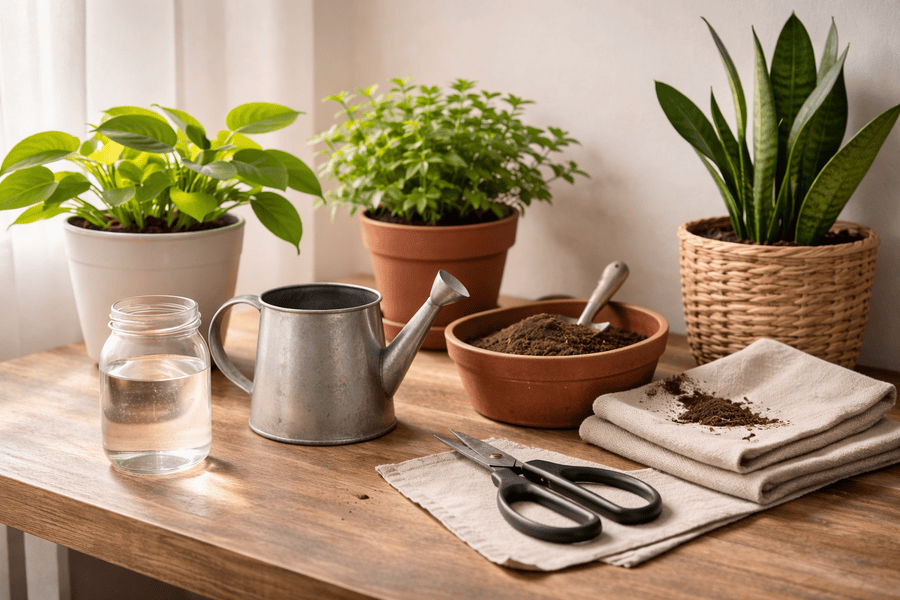
If you’ve ever searched indoor gardening tips and walked away thinking you need a full-on “plant lab”… you’re not alone. Between meters, gadgets, special pots, and fancy kits, it can feel like you’re supposed to buy your way into being a “real” plant person. 😅
So let’s answer the big question honestly: Do you really need specialized tools for indoor gardening?
For most beginner plant owners, the answer is no. You can grow healthy, happy indoor plants with simple basics and good habits. Specialized tools can be helpful later—when you have a specific problem to solve—but they aren’t required to start.
This guide will help you skip the clutter, focus on what actually matters, and build confidence without feeling pressured to buy everything in sight.
✨ What You’ll Learn
- ✅ What counts as a “specialized” indoor gardening tool
- 🧠 Why beginners feel like they need extra gear (even when they don’t)
- 🚫 Which specialized tools you can usually skip at first
- ♻️ Everyday items that work just as well for basic plant care
- 🧩 A simple checklist to decide if a tool is actually worth it
🪴 Do You Really Need Specialized Tools for Indoor Gardening?
Specialized tools can make certain tasks easier, but they don’t magically create healthy plants. Indoor gardening success usually comes down to a few fundamentals: light, watering rhythm, drainage, and matching plants to your home.
Think of it like cooking. A good meal isn’t created by owning a fancy blender and a drawer full of gadgets. It’s created by understanding heat, timing, and basic ingredients. Indoor gardening is the same way.
So before you spend money, let’s get clear on what “specialized tools” really means and when they actually help.
🌱 What Are “Specialized” Indoor Gardening Tools?
A specialized tool is something designed to solve a specific plant care problem or automate a task. It’s different from basic tools that simply help you do normal care.
Basic tools are things that support everyday plant care:
- 💧 a way to water neatly
- ✂️ something to prune dead leaves
- 🧺 something to keep repotting mess under control
Specialized tools are more “niche”:
- 📏 moisture meters and monitoring devices
- 🌡️ hygrometers and climate monitors
- 💡 grow lights and light measurement tools
- 💧 self-watering systems and automation
- 🧪 dosing gadgets for feeding schedules
Specialized doesn’t mean “better.” It just means “more specific.” For beginners, the risk is buying specialized tools before you even know what problem you’re trying to solve.
🤔 Why Beginners Feel Like They Need Extra Tools
Most beginners don’t buy tools because plants demand them. They buy tools because plant care can feel uncertain at first—and tools promise certainty.
Here are the most common reasons new plant owners get pulled into the “tool trap”:
- 📱 Social media setups make “normal” care look like a production
- 🤷 Conflicting advice makes you feel like you’re missing something
- 🪴 A yellow leaf feels like an emergency (and emergencies trigger shopping)
- 🧰 Outdoor gardening advice gets copied indoors where it doesn’t always fit
- ⏱️ You want fast results, but indoor plants grow slower
The truth is: indoor gardening is mostly about building a calm routine. Tools can support the routine, but they don’t replace it.
✅ What Your Indoor Plants Actually Need (Before Tools)
Before you worry about specialized gear, make sure these basics are covered. These are the real “success levers” in indoor gardening.
🪟 1) Light Placement
Light is plant fuel. If light is low, everything slows down: growth, water use, and recovery. Most “mystery problems” improve when a plant is placed in a better spot.
- 📍 Move plants closer to bright windows
- 🔄 Rotate weekly so growth stays balanced
- 🧼 Clean windows to maximize light
Helpful next read: Indoor Garden Lighting Made Easy
💧 2) Watering Awareness
Most beginners kill plants with kindness. Overwatering is common because indoor pots dry slowly—especially in low light.
- 👉 Check soil before watering (don’t water by calendar)
- ⚖️ Lift the pot to learn “wet vs dry” weight
- 🗓️ Have “check days,” not automatic watering days
If watering feels confusing: When to Water Indoor Plants
🕳️ 3) Drainage
This one is huge. A pot without drainage can keep roots wet too long, even if you’re careful. Good drainage makes beginner care so much easier.
Related: Do Indoor Plants Need Drainage Holes?
🌿 4) Matching Plants to Your Home
The easiest way to “need fewer tools” is choosing plants that naturally fit your light and routine. A low-light tolerant plant won’t require grow lights. A drought-tolerant plant won’t punish you for missing a day.
Plant matching guide: What to Grow: Best Plants for Your Indoor Space
👀 5) Observation and Patience
Plants don’t change overnight. Most good indoor care is: do something small, wait, observe, adjust.
This alone prevents “panic tool purchases.”
🛠️ Common Specialized Tools Beginners Ask About (And Whether You Need Them)
Now let’s talk about the tools people see online all the time. For each one, you’ll see when it helps—and when it’s mostly optional.
💡 Grow Lights
Grow lights can be useful, but they’re not an automatic requirement. Many indoor plants do fine near bright windows, especially if you choose plants that match your home’s light.
You might benefit from extra light if:
- 🌨️ winters are dark and growth stalls for months
- 🏢 your home has limited window light
- 🥬 you’re trying to grow edible plants indoors year-round
You can often skip them if:
- 🪟 you have a bright window and plants are placed close enough
- 🌿 you’re growing common houseplants that tolerate medium light
- 🧠 you’re still learning what “good light” looks like in your home
Deeper guide: Natural Light vs Grow Lights
📏 Moisture Meters
Moisture meters seem like the perfect beginner tool, but they can actually create doubt. Indoor potting mixes are often chunky and uneven, so one probe reading doesn’t always represent the whole pot.
A moisture meter can help if:
- 🪴 you have very large pots where the bottom stays wet longer
- 😬 you repeatedly overwater and need a “pause button”
- 🧠 you use it as a learning aid—not a replacement for observation
You can often skip it if:
- 👉 you’re willing to learn soil feel and pot weight
- 🪴 your plants are in small-to-medium pots
- 🤔 you find the readings confusing or inconsistent
🌡️ Hygrometers and Climate Monitors
These measure humidity and temperature. They can be useful for very humidity-sensitive plants, but most beginner plants are fine in normal indoor conditions.
They can help if:
- 🌿 you keep humidity-sensitive plants and want consistency
- 🔥 your home is very dry from heating
- ❄️ plants sit near cold windows or drafts
You can often skip them if:
- 🏠 you grow easy, beginner-friendly houseplants
- 🧠 you’re focused on light and watering first
Simple alternative: group plants together and keep them away from vents and drafts.
💧 Self-Watering Systems and Automation
Self-watering setups can be great for certain people, but they can also keep soil too wet if you’re still learning. Many plants prefer a dry-down period between waterings.
They can make sense if:
- ✈️ you travel often or miss watering regularly
- 🪴 you’ve already learned your plants’ needs and want consistency
- 💧 your plants prefer evenly moist soil
They can backfire if:
- 😅 you tend to “top off” water constantly
- 🕳️ drainage is already questionable
- 🌵 you’re growing plants that prefer drying out between waterings
🧪 Precision Feeding and Dosing Tools
Beginners often think fertilizer is the key to growth, but indoors, light matters more. Overfeeding is a common mistake and can cause stress or damage.
Most beginners do best with:
- 🗓️ light feeding during active growth months
- 🧠 consistency instead of complexity
Related: How Often Should I Fertilize My Indoor Plants?
🚫 Specialized Tools Most Beginners Can Skip (For Now)
Here’s the permission slip many beginners need: you can skip a lot of “specialized” gear and still be great at indoor gardening.
Most beginners can safely skip (at least at first):
- 🚫 complicated automated watering setups
- 🚫 soil testing gadgets and constant measuring
- 🚫 leaf shine products and “miracle” sprays
- 🚫 big starter kits where most items sit unused
- 🚫 specialized propagation gadgets for your very first plants
Skipping these doesn’t make you lazy. It makes you focused. Learn the basics first—then add tools only when they solve a real, repeating issue.
Pair this with: Beginner Indoor Gardening Tools You Can Skip
♻️ Everyday Items That Work Just as Well
One of the most budget-friendly truths in indoor gardening is that many “special tools” are just household items with better marketing.
Examples of simple, everyday alternatives:
- ✂️ Kitchen scissors for snipping dead leaves (clean them first)
- 🥄 A spoon or cup for scooping soil during repotting
- 🧴 A clean spray bottle for gentle misting when appropriate
- 🏷️ Tape and a marker for tracking last watering or feeding
- 🧺 A tray or old towel to keep soil mess contained
- 🥫 A jar for propagating cuttings in water
The goal is not “perfect gear.” The goal is a routine you can actually maintain.
🧠 When Specialized Tools Actually Make Sense
Specialized tools are most useful when your plant care problems become predictable. That usually happens after you’ve spent a bit of time learning your home’s light and your watering rhythm.
Specialized tools make sense when:
- 🔁 you have a repeating problem you can name
- 🪴 you’ve expanded from a few plants to many
- ⏱️ you want consistency and your schedule is unpredictable
- 🌿 you’re growing plants with more specific needs
Examples of “tool makes sense now” moments:
- 🌨️ Winter is dark and plants stretch → extra light can help
- 😬 You keep overwatering one large pot → a meter may be a learning aid
- ✈️ You travel frequently → self-watering can improve consistency
- 🔥 Home is very dry → monitoring humidity may help sensitive plants
The key is timing. Tools are best when they support skills you already have.
🧩 The “Is This Tool Worth It?” Checklist
Use this checklist anytime you feel tempted to buy a specialized tool. It’ll save you money and keep your indoor gardening setup simple.
- ❓ What problem am I trying to solve?
- 🧠 Have I confirmed the cause? (light, watering, drainage, pests)
- 🔁 Is this a repeating problem? (weekly or monthly, not one panic moment)
- 🪴 Will this help me learn, or replace learning?
- 🧺 Will I actually use it? And do I have a place to store it?
If you can’t answer these clearly, that’s a good sign to pause. Try adjusting placement, watering rhythm, or drainage first. Those solve the majority of beginner issues.
💸 Cost vs Value: Specialized Doesn’t Mean Better Indoors
Indoors, “specialized” tools can be helpful—but they aren’t always high value. Indoor tasks are smaller and gentler, which means simple tools often perform just fine for years.
A few truths that keep things grounded:
- 💡 Better light placement usually beats more gadgets
- 💧 Watering awareness beats automation when you’re learning
- 🕳️ Drainage beats “fancy pots” for root health
- 🧠 Skills last longer than tools
If you want a simple guide to indoor tools without the overwhelm, this pillar keeps it practical: Indoor Gardening Tools and Supplies Made Simple
💬 FAQs
Do beginners need specialized tools for indoor gardening?
No. Most beginners can grow healthy indoor plants with good light placement, careful watering habits, and containers with proper drainage. Specialized tools are optional and usually most helpful when you have a specific problem to solve.
What tools are actually necessary to start indoor gardening?
You only need a simple way to water neatly, something to prune dead leaves, and a way to keep repotting mess under control. Many beginners can use household items for these tasks.
Are grow lights considered specialized tools?
Yes. Grow lights are specialized because they solve a specific issue: low indoor light. Many plants do fine near bright windows, but grow lights can help in dark homes, during winter, or for edible plants indoors.
Can I grow indoor plants without any tools?
You can grow many indoor plants with minimal tools, especially if you have basic containers with drainage and you pay attention to light and watering. Tools make care easier, but plants mainly need good conditions and consistency.
When should I consider buying specialized tools?
Consider specialized tools when you have a repeating issue you understand, when your plant collection grows, or when you need consistency due to a busy schedule. Tools are best when they support habits you already do.
Do specialized tools make plants grow better?
Not automatically. Plants grow better when their basic needs are met—especially light, proper watering, and healthy roots. Tools can support those basics, but they don’t replace them.
What’s the biggest mistake beginners make with tools?
Buying tools before identifying the real cause of a plant problem. Many beginner issues are caused by low light placement, overwatering, or poor drainage, and those are often fixed with simple adjustments.
🌿 Conclusion
You don’t need specialized tools to start indoor gardening. Most beginner success comes from getting the basics right: better light placement, smarter watering habits, good drainage, and choosing plants that match your home.
Specialized tools can be helpful later—when you have a repeating problem and you know what you’re solving—but they aren’t required for healthy plants. Start simple, build confidence, and add tools only when they truly support your routine.
If you want a practical overview of helpful tools without the overwhelm, visit Indoor Gardening Tools and Supplies Made Simple. And if you want a clear “skip list,” this pairs perfectly: Beginner Indoor Gardening Tools You Can Skip.
Want more advanced tips and tricks? Visit my Indoor Vegetable Grower website

👋 About the Author
Steve is the creator of Indoor Gardening Essentials and a hands‑on indoor gardener with years of experience growing plants in small apartments, tight corners, and low‑light spaces.
He specializes in practical, beginner‑friendly setups—from kitchen herbs and windowsill succulents to self‑watering planters, terrariums, and simple hydroponic systems. Everything he teaches comes from real experimentation, not guesswork.
Steve documents his projects, successes, and occasional failures on his YouTube channel Small Farms Big Ideas , where he tests grow lights, soil mixes, watering routines, and small‑space gardening methods.
His goal is simple: help new indoor gardeners build confidence, avoid common mistakes, and grow healthy plants—no matter how small their space is.