
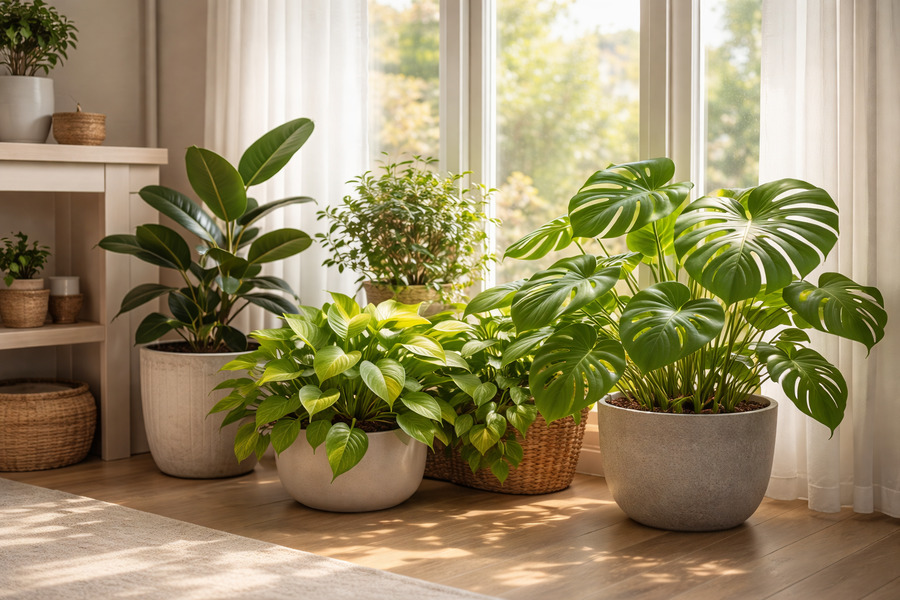
Do you need grow lights for indoor plants? It’s one of the first questions new plant owners ask — and the honest answer is that it depends.
Some indoor plants grow just fine with window light alone, while others struggle without extra help.
The confusion usually comes from mixed advice online. You’ll hear that grow lights are essential, unnecessary, or only for experts. In reality, grow lights are simply a tool — helpful in some situations and completely optional in others.
In this guide, you’ll learn when indoor plants can rely on natural light, when grow lights make a real difference, and how to decide without overcomplicating your setup.
💡 What You’ll Learn
- 🌞 When indoor plants don’t need grow lights
- 🪟 How to judge whether window light is enough
- 💡 Situations where grow lights actually help
- 🏠 How your home layout affects lighting needs
- ⚖️ How to decide without buying unnecessary equipment
🌞 When Indoor Plants Don’t Need Grow Lights
Many indoor plants can grow perfectly well without grow lights, especially if they’re placed thoughtfully near windows. Bright rooms with consistent daylight often provide enough usable light for common houseplants.
Plants that naturally tolerate low or indirect light are especially forgiving. If these plants are growing steadily, producing healthy leaves, and not stretching toward light, additional lighting may not be necessary.
🪟 Bright windows and good placement
Window direction and distance matter more than most people realize. A plant placed close to a bright window can receive far more usable light than one sitting just a few feet back.
If you’re unsure how strong your window light really is, this guide explains best window directions for indoor plants and what they mean in real homes.
🌿 Plants adapted to low or indirect light
Many popular houseplants evolved under tree canopies or shaded environments. Indoors, they’re comfortable with moderate light and often struggle more from too much light than too little.
If these plants are growing evenly and showing new leaves, adding grow lights won’t necessarily improve results — and in some cases, it can cause stress.
Natural Indoor Lighting Guides
🪟 How to Tell If Window Light Is Enough
Instead of guessing, it helps to watch how plants respond to their current light. Plants are very good at signaling whether conditions are working.
📏 Distance from windows matters
Light intensity drops quickly as you move away from a window. A plant right next to the glass receives far more light than one across the room — even if the space feels bright to you.
If moving plants closer isn’t possible, supplemental lighting can help bridge the gap without replacing natural light entirely.
🌱 Signs plants are doing fine without extra light
Plants that don’t need grow lights often show these signs:
- 🌿 Compact, upright growth
- 🍃 Healthy leaf color
- 📈 Slow but steady new growth
If these signs are present, grow lights are optional — not required.
In the next section, we’ll look at when grow lights are genuinely helpful, including apartments, winter light drops, and growing herbs indoors.
Indoor Plant Troubleshooting Guides
💡 When Grow Lights Are Worth Using
Grow lights become helpful when natural light can’t consistently meet a plant’s needs. This isn’t a failure on your part — it’s usually a limitation of the space, the season, or the type of plant you’re growing.
🏠 Apartments and rooms with limited windows
If your home has small windows, shaded exposures, or rooms that don’t receive direct daylight, plants may not get enough usable light even if the space feels bright.
In these situations, grow lights act as a supplement rather than a replacement. This is especially common in rentals and smaller homes, as covered in indoor plant lighting for apartments and small spaces.
📆 Winter and seasonal light drops
Even bright homes experience a drop in usable light during fall and winter. Shorter days and lower sun angles can slow plant growth or cause stretching.
Seasonal grow light use is often enough to keep plants healthy until natural light improves again.
🌿 Growing herbs and edible plants indoors
Herbs and edible plants generally need stronger, more consistent light than most houseplants. Without enough light, they grow tall, weak, and less productive.
If you’re growing herbs indoors, grow lights often make the difference between steady harvests and disappointing growth. This difference is explained further in lighting for herbs vs houseplants.
Indoor Herbs & Edibles Guides
⚖️ Grow Lights vs More Window Time
Before adding lights, it’s worth checking whether simple adjustments to window placement could solve the problem.
🪟 When moving plants closer works
If plants are several feet away from a window, moving them closer can dramatically increase light exposure. This is often the easiest and cheapest fix.
If plants respond well after being moved, grow lights may not be necessary.
💡 When supplemental light is the better option
Grow lights are a better choice when:
- 🏠 Windows aren’t available or are poorly oriented
- 📆 Seasonal light drops cause repeated issues
- 🌿 Plants show ongoing signs of low light
If you’re seeing consistent stretching or pale growth, reviewing signs your indoor plants need more light can help confirm whether lighting is the real issue.
In the final section, we’ll walk through a simple decision process to help you decide whether grow lights are right for your space — without overbuying or overcomplicating things.
Grow Light Setup Guides
🧠 How to Decide If You Need Grow Lights
You don’t need a meter or complicated setup to decide whether grow lights are worth it. A few simple questions usually make the answer clear.
❓ Ask yourself these questions
- 🪟 Do my plants sit close to a bright window?
- 🌿 Are they growing steadily without stretching?
- 📆 Do they slow down significantly in winter?
- 🏠 Is my space limited in natural light?
If most answers point to limited or inconsistent light, grow lights can be a helpful addition. If not, you can often skip them.
⚖️ Avoiding unnecessary equipment
Grow lights aren’t required for every indoor plant. Adding lights won’t fix issues caused by overwatering, poor soil, or incorrect placement.
If plants are already healthy, growing slowly but steadily, and maintaining good color, adding lights is optional — not mandatory.
⚠️ Common Misconceptions About Grow Lights
A lot of confusion comes from a few persistent myths. Clearing these up makes the decision much easier.
- ❌ All indoor plants need grow lights
- ❌ Grow lights should run all day
- ❌ Brighter lights always mean better growth
In reality, most indoor plants prefer balanced light — not maximum light. Overdoing it can cause stress, which is covered in can indoor plants get too much light.
Beginner Indoor Gardening Guides
❓ Do You Need Grow Lights for Indoor Plants? FAQs
Do all indoor plants need grow lights?
No. Many houseplants grow well with window light alone. Grow lights are most useful when natural light is limited or inconsistent.
Can grow lights replace window light?
They can supplement or replace window light in low-light spaces, but they don’t need to fully replace natural light for most plants.
Are grow lights bad for houseplants?
No, as long as they’re used correctly. Problems usually come from lights being too close or running too long.
Do grow lights increase electricity bills a lot?
Most modern LED grow lights use relatively little electricity, especially when run for moderate daily hours.
Is it okay to use grow lights only part of the year?
Yes. Many people use grow lights seasonally during winter or low-light months and turn them off when natural light improves.
🌱 Final Thoughts: Keep Lighting Simple
Grow lights aren’t a requirement for successful indoor plants — they’re simply a tool. When used thoughtfully, they can make indoor growing easier, especially in low-light homes.
Start with good window placement, observe how your plants respond, and add grow lights only if there’s a clear need. Keeping things simple is often the best approach.
Continue Exploring Indoor Plant Lighting
📚 Further Reading: Natural Light and Indoor Plants
If you’d like a deeper explanation of how indoor plants use natural light and when supplemental lighting may help, these university extension resources provide clear, practical guidance:
- University of Minnesota Extension – Lighting Indoor Plants
- Penn State Extension – Low-Light Houseplants
These resources explain how plants respond to different light levels, which can help you decide when grow lights are helpful and when window light is enough.

👋 About the Author
Steve is the creator of Indoor Gardening Essentials and a hands‑on indoor gardener with years of experience growing plants in small apartments, tight corners, and low‑light spaces.
He specializes in practical, beginner‑friendly setups—from kitchen herbs and windowsill succulents to self‑watering planters, terrariums, and simple hydroponic systems. Everything he teaches comes from real experimentation, not guesswork.
Steve documents his projects, successes, and occasional failures on his YouTube channel Small Farms Big Ideas , where he tests grow lights, soil mixes, watering routines, and small‑space gardening methods.
His goal is simple: help new indoor gardeners build confidence, avoid common mistakes, and grow healthy plants—no matter how small their space is.