
Bottom watering is one of those plant-care tips that gets passed around like it’s a universal rule: “Stop watering from the top and your plants will thrive.”
And hey, sometimes that’s true. Bottom watering containers can be a game changer for certain plants and certain situations, especially indoors where you’re trying not to splash soil everywhere or soak your furniture.
But bottom watering isn’t magic. If your soil is heavy, your room is low light, or your pot sits in water too long, bottom watering can create the same problems you were trying to avoid (hello, soggy roots).
In this guide, you’ll learn what bottom watering actually does, when it helps, when it doesn’t, and how to use it as a simple tool — not a strict rule.
📦 What You’ll Learn
- ✅ What bottom watering really does inside container soil
- ✅ When it helps indoor plants (and when it backfires)
- ✅ Which plants respond best to bottom watering
- ✅ How long to soak pots (and what’s too long)
- ✅ Common mistakes that lead to soggy soil and root problems
🪴 What Is Bottom Watering?
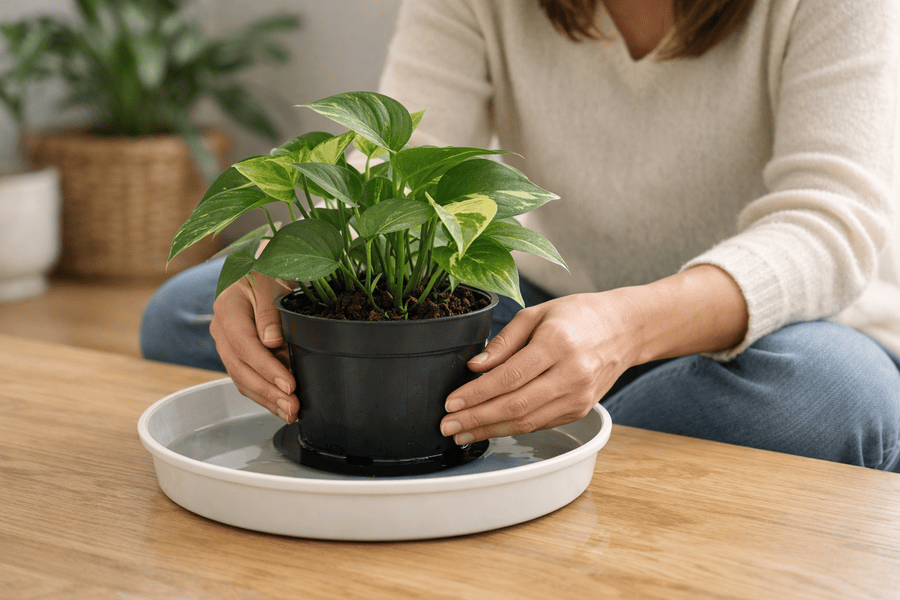
Bottom watering means placing a pot (with drainage holes) into a shallow tray, saucer, or bin of water and allowing the soil to absorb water upward from the bottom.
Instead of pouring water onto the topsoil, you let moisture travel up through the drainage holes and evenly hydrate the root zone.
Think of it like letting your pot “drink” from a plate instead of you “pouring a drink” over its head. It’s calmer, cleaner, and often more controlled — when done correctly.
🧠 How Water Moves Upward (In Plain English)
- 💧 Water enters through the drainage holes.
- 🧽 Soil pulls water upward using capillary action (like a sponge).
- 🌿 Roots access moisture without the top layer being constantly soaked.
🚫 What Bottom Watering Is NOT
- 🚫 It’s not “self-watering.” You still choose the timing and amount.
- 🚫 It’s not a replacement for drainage holes (it depends on them).
- 🚫 It’s not automatically safer than top watering — it’s just different.
If you’re unsure whether your pots need drainage holes (or you’ve been using decorative pots without them), this is a helpful foundation:
Do Indoor Plants Need Drainage Holes? Best Practices
✅ Why Bottom Watering Can Help Indoor Plants
Bottom watering works best when you use it intentionally — for the right plant, in the right conditions, with soil that can actually absorb water evenly.
💧 1) It Hydrates Dry Soil More Evenly
If your potting mix has dried out too far, it can become water-repellent. You pour water on top… and it runs down the side of the pot or straight out the drainage holes. Bottom watering gives the soil time to slowly absorb moisture instead of “rejecting” it.
🌱 2) It Encourages Deeper Roots (In Many Plants)
Roots grow toward water. When moisture consistently comes from below, some plants develop healthier, deeper root growth instead of relying on shallow surface roots that dry out quickly.
🪴 3) It Keeps Topsoil Drier (Which Can Reduce Gnats)
Fungus gnats love damp topsoil. Bottom watering can help keep the top inch of soil a little drier, which makes your pot less appealing as a gnat nursery.
🧂 4) It Can Reduce Surface Salt Buildup
Fertilizer salts often accumulate near the top of the soil. If you always top water lightly, those salts can sit and build up right where the plant stem meets the soil. Bottom watering can reduce how often you “re-wet” that salty surface layer.
🧼 5) It’s Cleaner Indoors
No splashing. No soil craters. Less runoff to wipe up. Bottom watering is especially nice when plants live on shelves, window sills, or near furniture you don’t want soaked.
If keeping floors and furniture safe is a big priority, this post pairs nicely with bottom watering routines:
Saucers & Drip Trays: How to Protect Floors Without Root Rot
🧭 When Bottom Watering Works Best
Bottom watering isn’t “better” — it’s just better in certain situations. Here are the times it tends to shine.
✅ Best Use Case: When Your Soil Has Dried Too Much
If your potting mix has pulled away from the sides of the pot, feels dusty, or water runs right through when you top water, bottom watering can help rehydrate the soil evenly.
✅ Best Use Case: When Leaves Hate Getting Wet
Some plants are more prone to leaf spotting or crown issues when water sits on their leaves or collects at the base. Bottom watering helps you avoid splashing and keeps the plant’s crown drier.
✅ Best Use Case: When You Want a Controlled Drink (Not a Flood)
Bottom watering lets the pot take what it needs for a set period. You’re less likely to pour too much too fast and create runoff mess.
🏠 Best Conditions Indoors
- 💡 Bright to moderate light (plants use water at a reasonable pace)
- 🌡️ Average indoor warmth (not cold and drafty)
- 🌬️ Some airflow (helps soil dry down normally between waterings)
- 🪴 A potting mix that drains well and stays airy
If you’re still building confidence with watering timing, this beginner guide helps you stop guessing:
How Do I Know When to Water Indoor Plants?
⚠️ When Bottom Watering Doesn’t Help (And Can Make Things Worse)
Bottom watering has a “safe and gentle” reputation, but it can absolutely cause problems when the setup isn’t right. Most issues happen for the same reason: the soil stays wet longer than the plant can handle.
🧱 1) Heavy or Compacted Soil
If your soil is dense, it absorbs water slowly and holds it for a long time. Bottom watering can soak the lower root zone and keep it damp far longer than you think — especially if you leave the pot sitting in water.
- ⚠️ If your soil feels muddy or stays wet for days, bottom watering may not be your friend.
- ✅ Airy mixes are safer because they absorb evenly and still allow oxygen to reach roots.
🌥️ 2) Low Light Rooms
In low light, plants grow slower and use less water. That means the same bottom watering routine that works in a bright window can oversaturate the soil in a darker corner.
A lot of indoor root rot isn’t caused by “too much water” in general — it’s caused by too much water for the amount of light.
🪴 3) Plants That Prefer Dry-Down Cycles
Some plants genuinely prefer drying out between waterings. If you bottom water them frequently, you can keep the lower root zone too moist for too long.
- 🌵 Cacti and succulents
- 🪴 Snake plants
- 🪴 ZZ plants
- 🌿 Many arid-adapted or thick-rooted plants
🚫 4) Pots Without Drainage Holes
Bottom watering only works when water can enter (and later drain or be removed). If your pot has no drainage holes, you can’t bottom water in a controlled way. You’ll end up with water trapped in the pot, which is exactly what causes root issues.
If you like decorative cache pots, the safer option is to keep plants in a nursery pot inside the cache pot (so you can lift and drain). This guide explains it:
How to Use Cache Pots Without Killing Your Plants
🌿 Best Indoor Plants for Bottom Watering
Not every plant needs bottom watering, but some plants respond really well to it — especially those that appreciate steady hydration and don’t love water splashing on leaves.
✅ Plants That Often Respond Well
- 🌸 African violets: famous for preferring bottom watering to keep leaves dry
- 🌿 Peace lilies: steady moisture helps (as long as soil stays airy)
- 🕷️ Spider plants: adaptable and forgiving
- 🌿 Ferns: many prefer even moisture (but don’t leave them soaking too long)
- 🌿 Herbs in containers: can benefit from even hydration
⚠️ Plants That Can Go Either Way (Depends on Conditions)
- 🪴 Pothos / philodendron: fine if you don’t keep soil constantly damp
- 🪴 Monstera (younger plants): okay if soil is airy and you drain well after soaking
- 🌱 Most common houseplants: bottom watering can be used occasionally as a tool
🚫 Plants That Usually Don’t Benefit
- 🌵 Succulents and cacti
- 🪴 Snake plants
- 🪴 ZZ plants
If you’re trying to build a beginner plant collection that’s forgiving, you may like this companion post:
Easiest Indoor Plants for Beginners
🪣 How to Bottom Water Containers Safely (Beginner-Safe Steps)
Bottom watering is simple, but timing matters. The goal is to hydrate the pot — not keep it sitting in water for hours.
✅ Step-by-Step Bottom Watering Routine
- 1️⃣ Place your pot (with drainage holes) into a tray or shallow container.
- 2️⃣ Add water to the tray until it reaches about 1–2 inches high (or roughly the bottom quarter of the pot).
- 3️⃣ Let the pot sit for 10–30 minutes depending on pot size and soil dryness.
- 4️⃣ Check the soil surface: when it feels slightly moist, the pot has absorbed enough.
- 5️⃣ Remove the pot and let it drain fully before returning it to its spot or cache pot.
⏱️ How Long Is Too Long?
For most indoor plants, soaking longer than 30–45 minutes isn’t helpful. It can oversaturate the lower soil zone and reduce oxygen.
If your plant is very dry, you can do a second shorter soak later rather than one long soak now.
🧪 A Quick “Did I Overdo It?” Check
- ✅ Soil feels evenly moist (not soggy or muddy)
- ✅ Pot feels heavier, but not dripping wet for hours
- ✅ You’re able to let it drain before putting it back
If you’re still trying to learn the difference between “thirsty” and “too wet,” this guide helps a lot:
Underwatering vs Overwatering: How to Tell the Difference
❌ Common Bottom Watering Mistakes (And Easy Fixes)
Most bottom watering problems come from one of two things: soaking too long or using it as a one-size-fits-all rule. Here’s how to avoid the common traps.
❌ Mistake 1: Leaving the Pot Sitting in Water Too Long
This is the big one. If the pot sits in water for hours, the lower soil zone can become waterlogged. Roots need oxygen, and oxygen drops fast in saturated soil.
- ✅ Fix: set a timer (10–30 minutes is usually enough).
- ✅ Fix: if the plant was extremely dry, do two shorter sessions instead of one long soak.
❌ Mistake 2: Bottom Watering Plants That Prefer Dry Soil
Some plants genuinely like drying out. Bottom watering them “because it’s safer” can keep their roots too moist.
- ✅ Fix: use top watering for drought-tolerant plants and let soil dry more fully.
- ✅ Fix: if you bottom water occasionally, keep it brief and infrequent.
❌ Mistake 3: Using Bottom Watering as Your Only Method Forever
Bottom watering can be a great tool, but relying on it exclusively can allow mineral salts to build up over time (especially if you fertilize or have hard water).
- ✅ Fix: top water occasionally to flush the soil (more on this below).
❌ Mistake 4: Not Letting the Pot Drain Before Returning It
If you bottom water and then immediately place the pot back inside a cache pot or on a surface without drainage space, you can trap water underneath and keep roots too wet.
- ✅ Fix: let it drain for a few minutes after soaking.
- ✅ Fix: use a saucer or drip tray that you actually empty.
🆚 Bottom Watering vs Top Watering (Which Is Better?)
Neither method is “better” all the time. The best indoor plant owners use both — depending on the goal.
✅ When Bottom Watering Is Better
- Soil has become dry and water-repellent
- You want even hydration without runoff mess
- Your plant is sensitive to wet leaves (like African violets)
- You want the top inch of soil a little drier (gnat control bonus)
✅ When Top Watering Is Better
- You need to flush salts and minerals out of the soil
- You want to fully rehydrate the entire pot quickly
- You’re doing routine “maintenance watering” for most houseplants
- You’re checking runoff to confirm you didn’t under-water
🧠 The Beginner “Best of Both” Routine
If you like bottom watering, a really solid approach is:
- ✅ Bottom water most of the time for clean, controlled hydration
- ✅ Top water every few weeks to flush salts and refresh the soil
- ✅ Adjust based on season and light (less in winter, more in summer)
🧂 About Salt Buildup (The Reason You Should Still Top Water Sometimes)
If you fertilize or have mineral-heavy tap water, salts can accumulate in container soil. Bottom watering reduces splashing and keeps the top layer drier, but it can also mean salts don’t get flushed out as often.
A simple solution is occasional top watering with full drainage. Think of it like “rinsing the soil.”
- ✅ Once every few weeks, top water until you see runoff
- ✅ Let it drain completely
- ✅ Then return to your normal watering method
🧯 Can Bottom Watering Cause Root Rot?
Yes, but not because bottom watering is inherently dangerous. Root rot is usually a result of roots staying too wet for too long with low oxygen. Bottom watering can contribute to that if:
- ⚠️ Soil is dense and stays wet for days
- ⚠️ The pot sits in water too long
- ⚠️ The plant is in low light and uses water slowly
- ⚠️ You never let the pot drain before putting it back
If root rot prevention is a big worry (totally normal), this is a great next read in your Containers & Systems cluster:
❓ Bottom Watering Containers FAQs
Is bottom watering better than top watering?
It depends on the plant and the situation. Bottom watering is great for even hydration, clean indoor watering, and plants that dislike wet leaves. Top watering is better for flushing salts, routine watering, and quickly saturating the whole pot.
Can bottom watering cause root rot?
Yes, if the soil stays wet too long or the pot sits in water for extended periods. Using an airy soil mix, soaking for a limited time, and letting the pot drain after watering makes bottom watering much safer.
Should I always bottom water indoor plants?
No. Bottom watering works best as a tool you use when it helps — not a rule you follow for every plant. Many indoor plants do well with top watering, and some plants prefer drying out between waterings.
How long should I bottom water a plant?
For most indoor plants, 10–30 minutes is enough. Larger pots may need closer to 30 minutes, while small pots may only need 10–15. Avoid leaving pots soaking for hours.
🌱 Conclusion: Should You Bottom Water Indoor Plants?
Bottom watering is a helpful technique — especially for indoor gardeners who want cleaner watering, more even hydration, and less mess.
But it’s not a universal upgrade, and it’s not always safer than top watering.
If your soil is airy, your pot has drainage holes, and your plant actually uses water at a normal pace, bottom watering can be a great tool in your routine.
If your room is low light, your soil stays wet for days, or your plant prefers drying out, bottom watering may do more harm than good.
The best approach is flexibility: use bottom watering when it helps, top water occasionally to flush salts, and always let your plant’s light and soil conditions guide your timing.
Containers and Systems Ideas for Small Gardens: Sure Fire Tips

👋 About the Author
Steve is the creator of Indoor Gardening Essentials and a hands‑on indoor gardener with years of experience growing plants in small apartments, tight corners, and low‑light spaces.
He specializes in practical, beginner‑friendly setups—from kitchen herbs and windowsill succulents to self‑watering planters, terrariums, and simple hydroponic systems. Everything he teaches comes from real experimentation, not guesswork.
Steve documents his projects, successes, and occasional failures on his YouTube channel Small Farms Big Ideas , where he tests grow lights, soil mixes, watering routines, and small‑space gardening methods.
His goal is simple: help new indoor gardeners build confidence, avoid common mistakes, and grow healthy plants—no matter how small their space is.